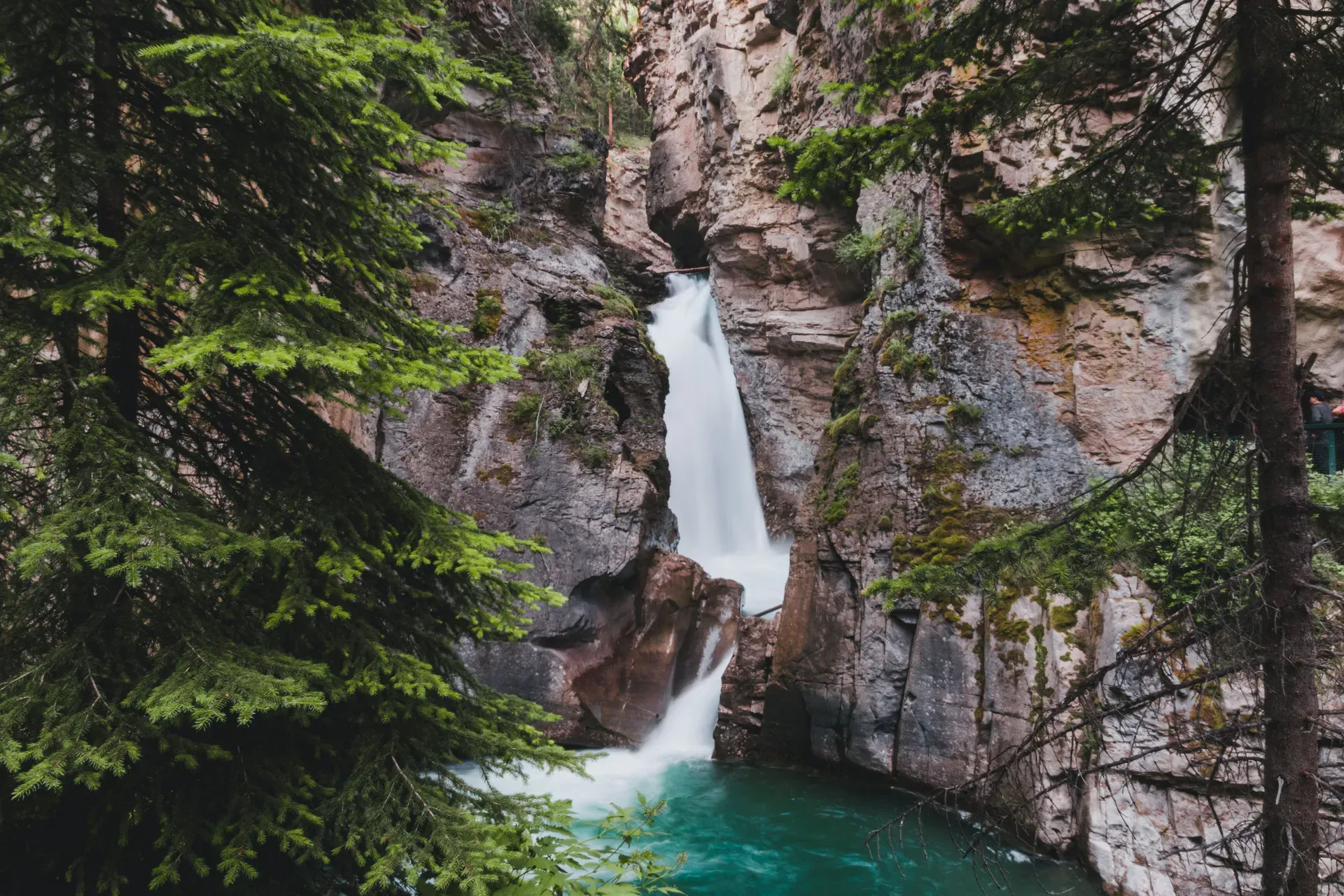
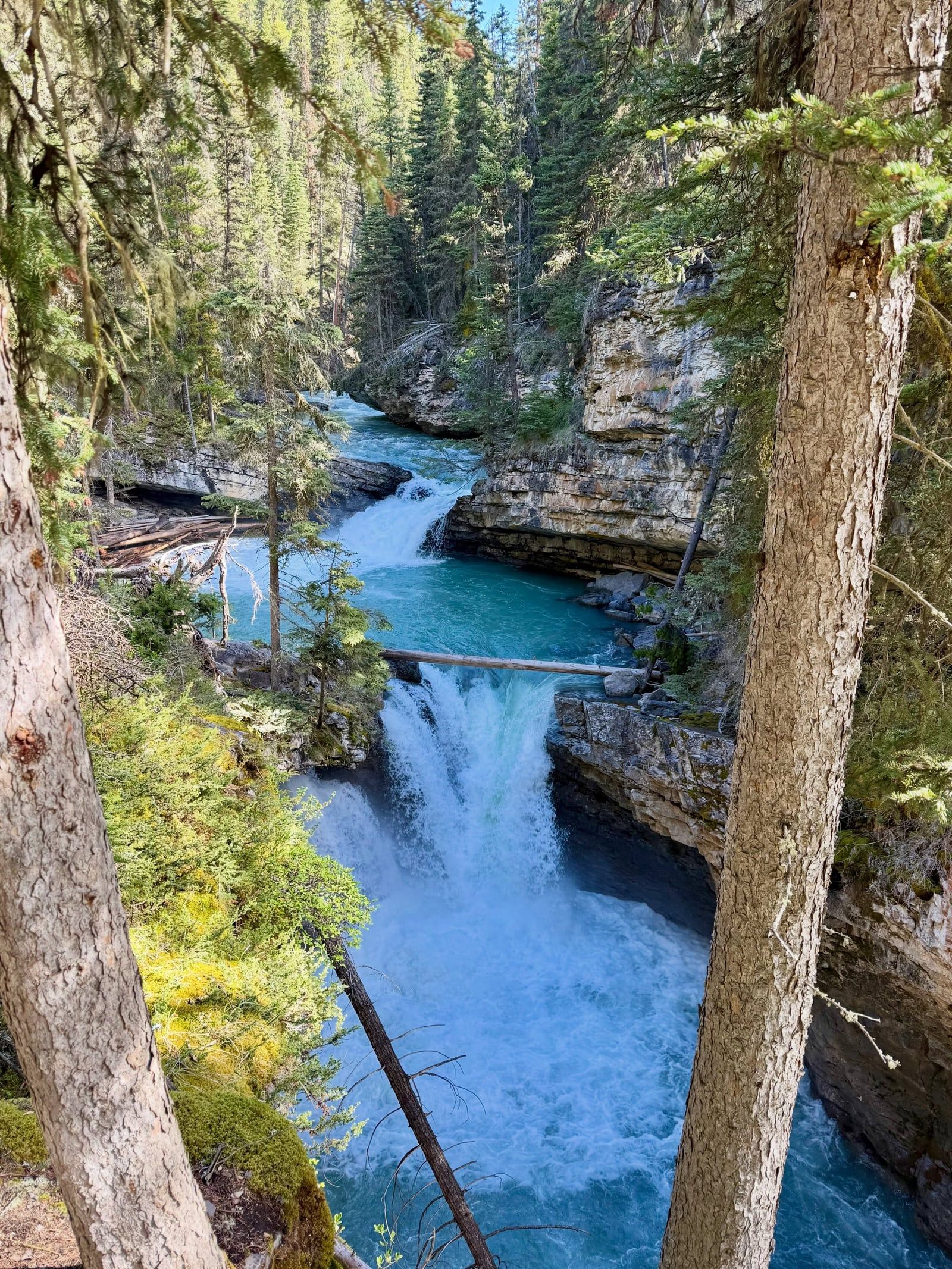
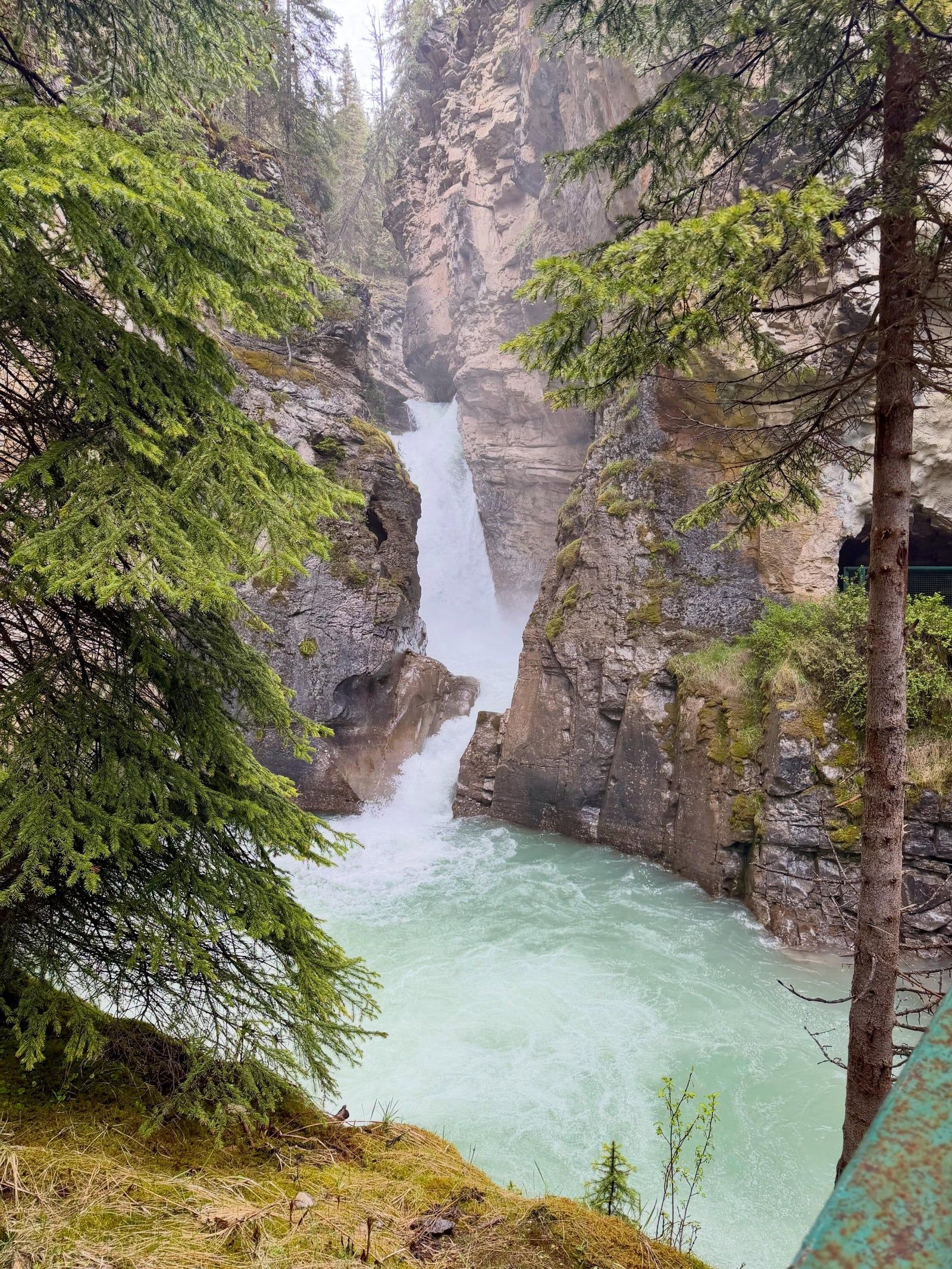
Follow suspended steel catwalks bolted directly into 300-million-year-old limestone to reach thundering waterfalls inside this deep mountain gorge. The accessible 1.2-kilometer paved trail leads to the Lower Falls, while hikers seeking the 30-meter-high Upper Falls must navigate a steeper 2.5-kilometer path.
Find Guided ToursJohnston Canyon is a natural gorge located 25 kilometers west of Banff along the Bow Valley Parkway in Banff National Park. Carved by the flowing waters of Johnston Creek, the canyon features towering limestone cliffs, deep pools, and cascading waterfalls. Visitors navigate the gorge using a network of packed earth trails and elevated steel catwalks bolted directly into the rock walls. In 2025, the site recorded 714,773 visitors, making it one of the park's most heavily trafficked natural attractions.
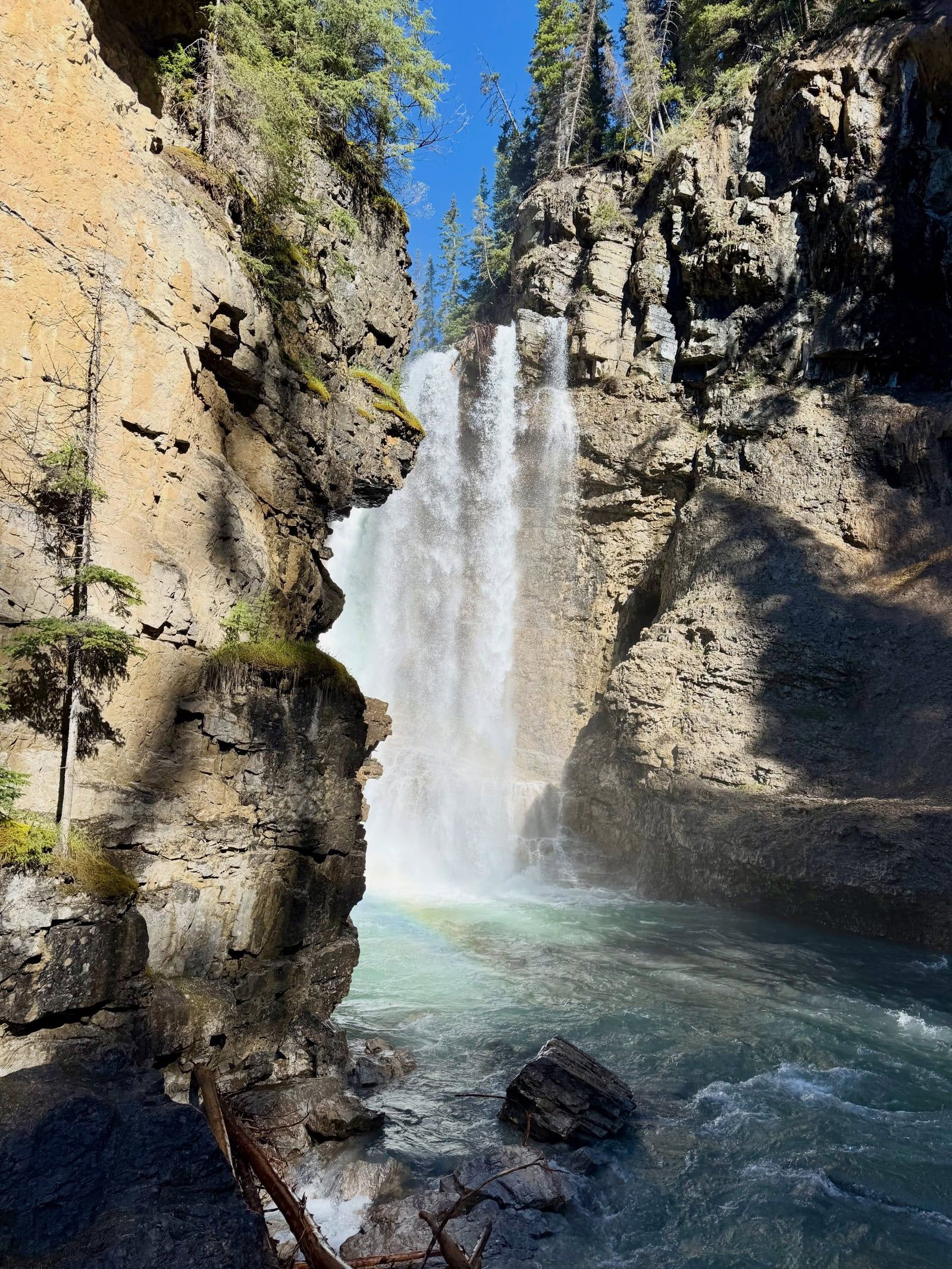
The canyon's geological foundations date back 300 to 500 million years to the Paleozoic Era. Over thousands of years, relentless water erosion from Johnston Creek cut through the sedimentary limestone bedrock, exposing fossilized remains of ancient marine life. The resulting karst topography includes dissolved limestone fissures, deep caves, sinkholes, and waterfalls like the 30-meter-high Upper Falls.
Long before European exploration, the Indigenous Stoney First Nations of the Bow Valley recognized the area's natural resources. In the 1880s, a prospector named Johnston mapped the gorge in an unsuccessful search for gold. Tourism infrastructure began in the early 1900s when Hungarian World War I internment camp prisoners from Castle Mountain constructed the first wooden bridges and trails. By 1926, Walter and Marguerite Camp established the Johnston Canyon Lodge, building 42 bungalows that remain today. Parks Canada acquired the site in the 1970s, replacing the wooden paths with the current steel catwalks.
Beyond its geological and historical significance, the canyon serves as a vital ecological habitat. The steep limestone cliff walls provide a rare breeding ground for the endangered migratory Black Swift bird. To protect this sensitive nesting environment, off-trail movement is strictly prohibited between May 15 and November 15, with violations carrying fines of up to $25,000 CAD.
Discover the full history and cultural significance on our About page.
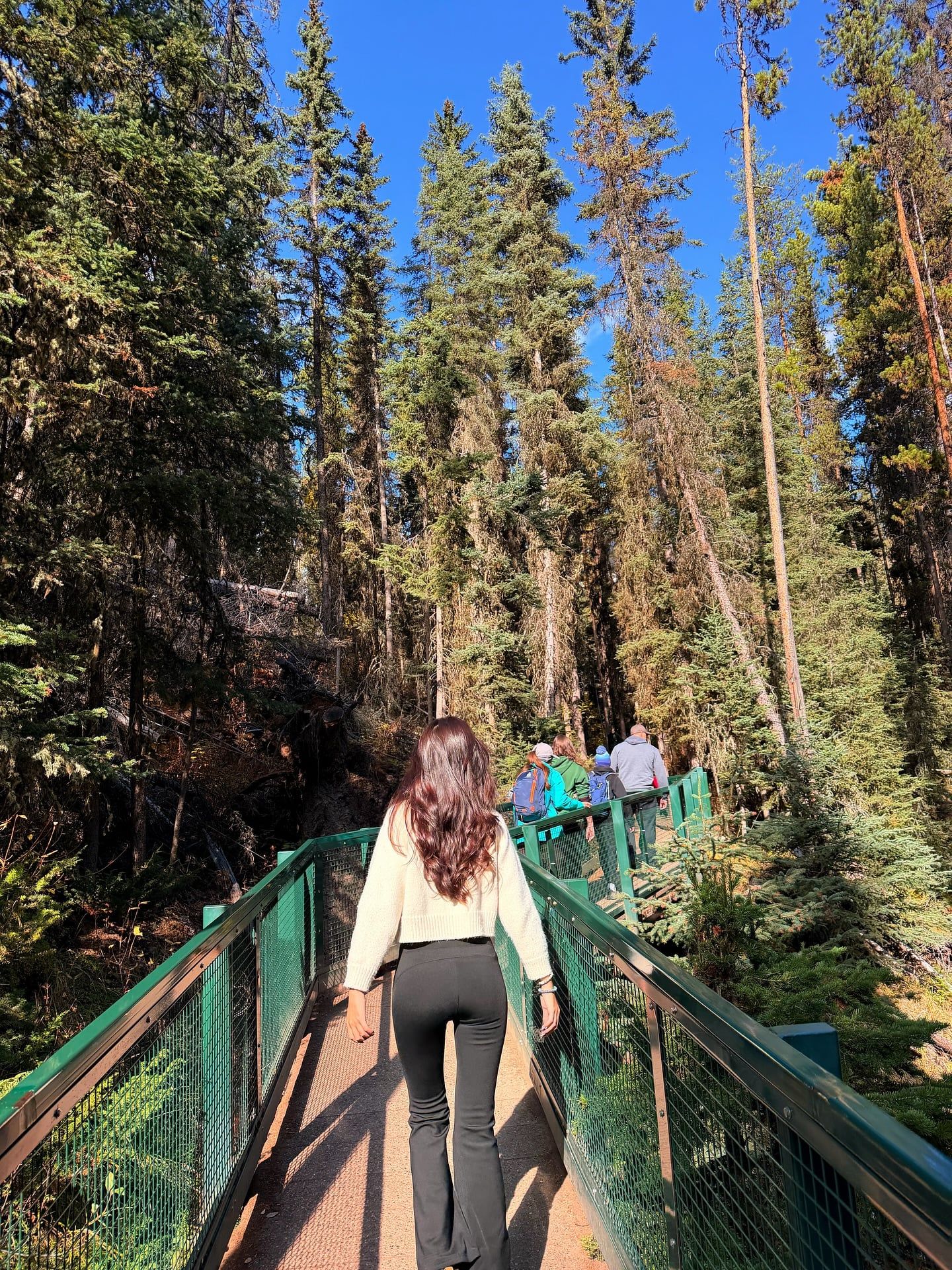
A 1.2-kilometer paved path and steel catwalk network bolted directly into 300 to 500-million-year-old limestone cliffs leads to the Lower Falls. Hikers cross a wooden footbridge and pass through a natural rock tunnel to reach a viewing platform standing just feet from the thundering water.
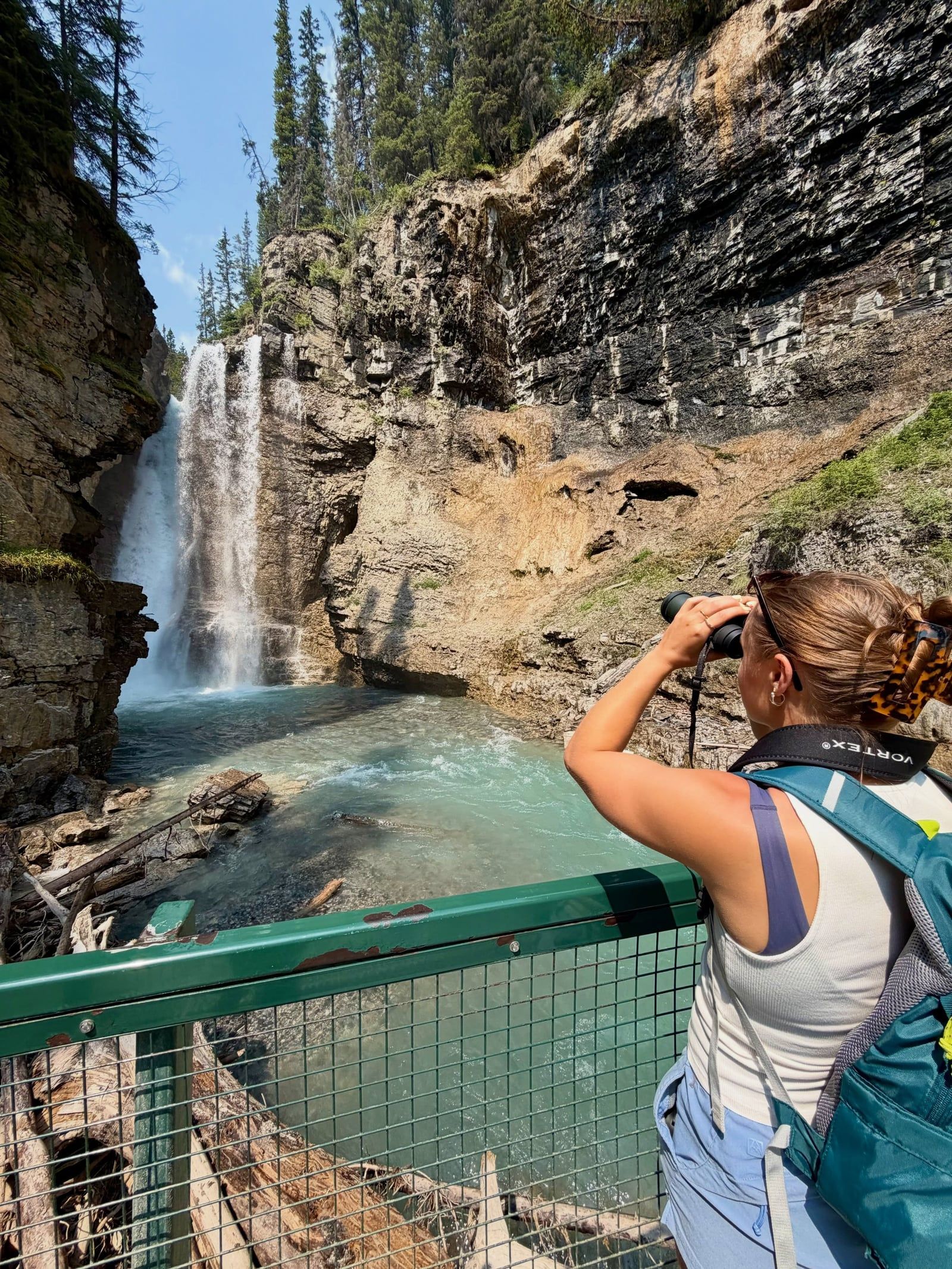
Climbing 120 meters in elevation over a 2.5-kilometer trail rewards hikers with views of a dramatic 30-meter-high cascading waterfall. Two distinct viewpoints allow visitors to look across at the base or stand on an overhanging platform peering directly into the deep, churning pools below.
Extending the hike 5.8 kilometers beyond the Upper Falls leads into a wide-open alpine meadow surrounded by towering peaks. Here, seven unique mineral-rich pools bubble up from underground springs, displaying varying blue and green hues. Wooden benches provide a quiet resting spot away from the main crowds.
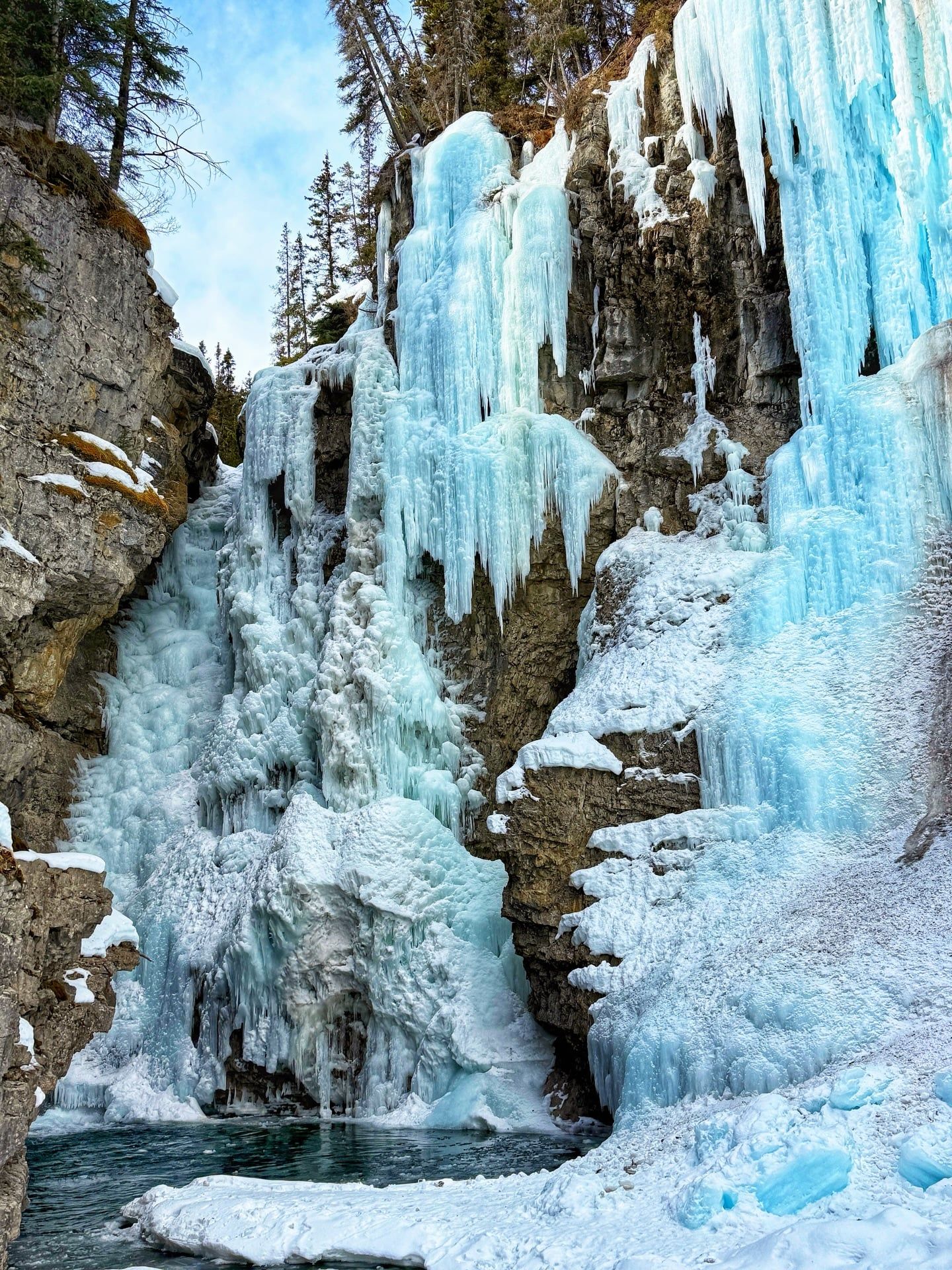
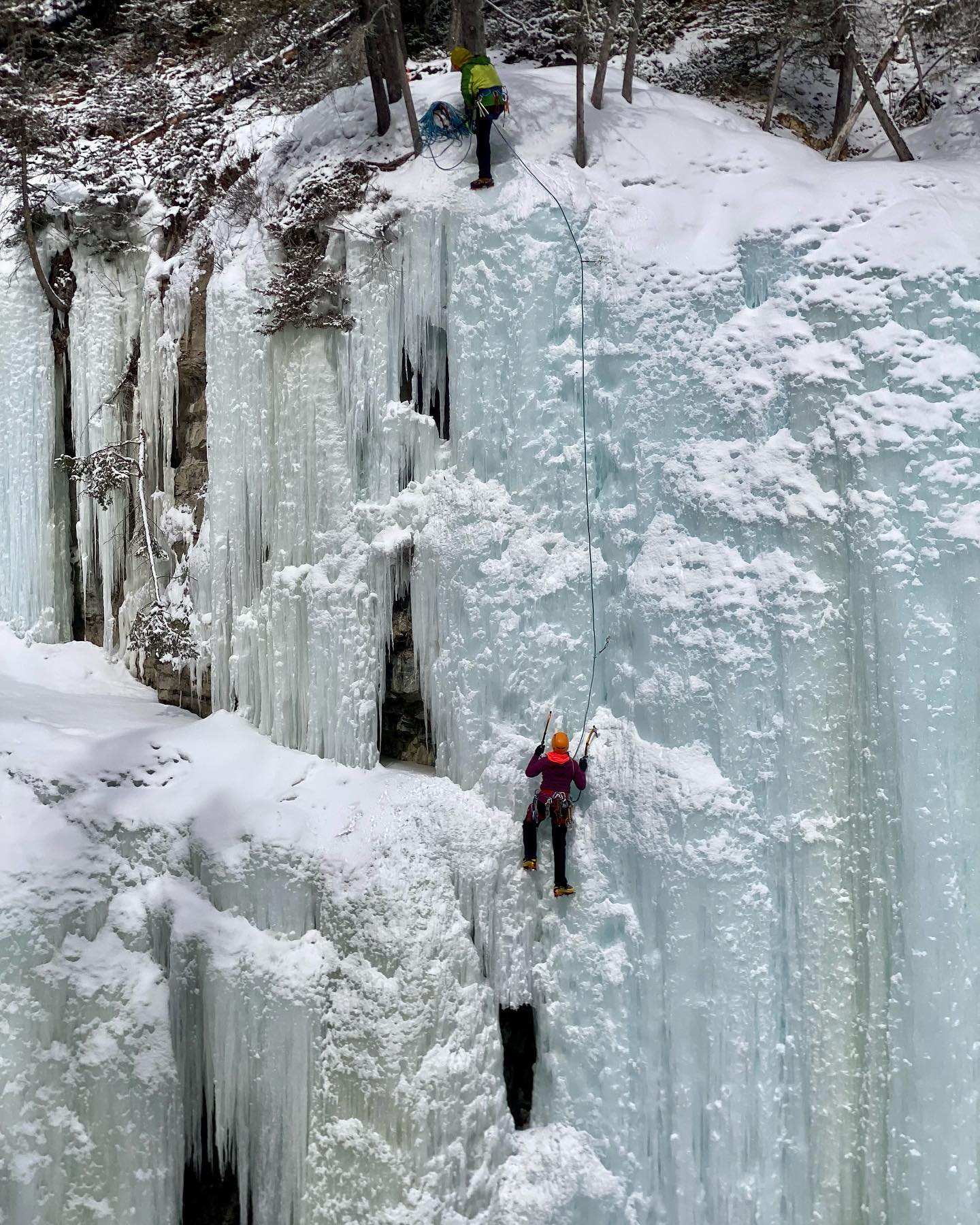
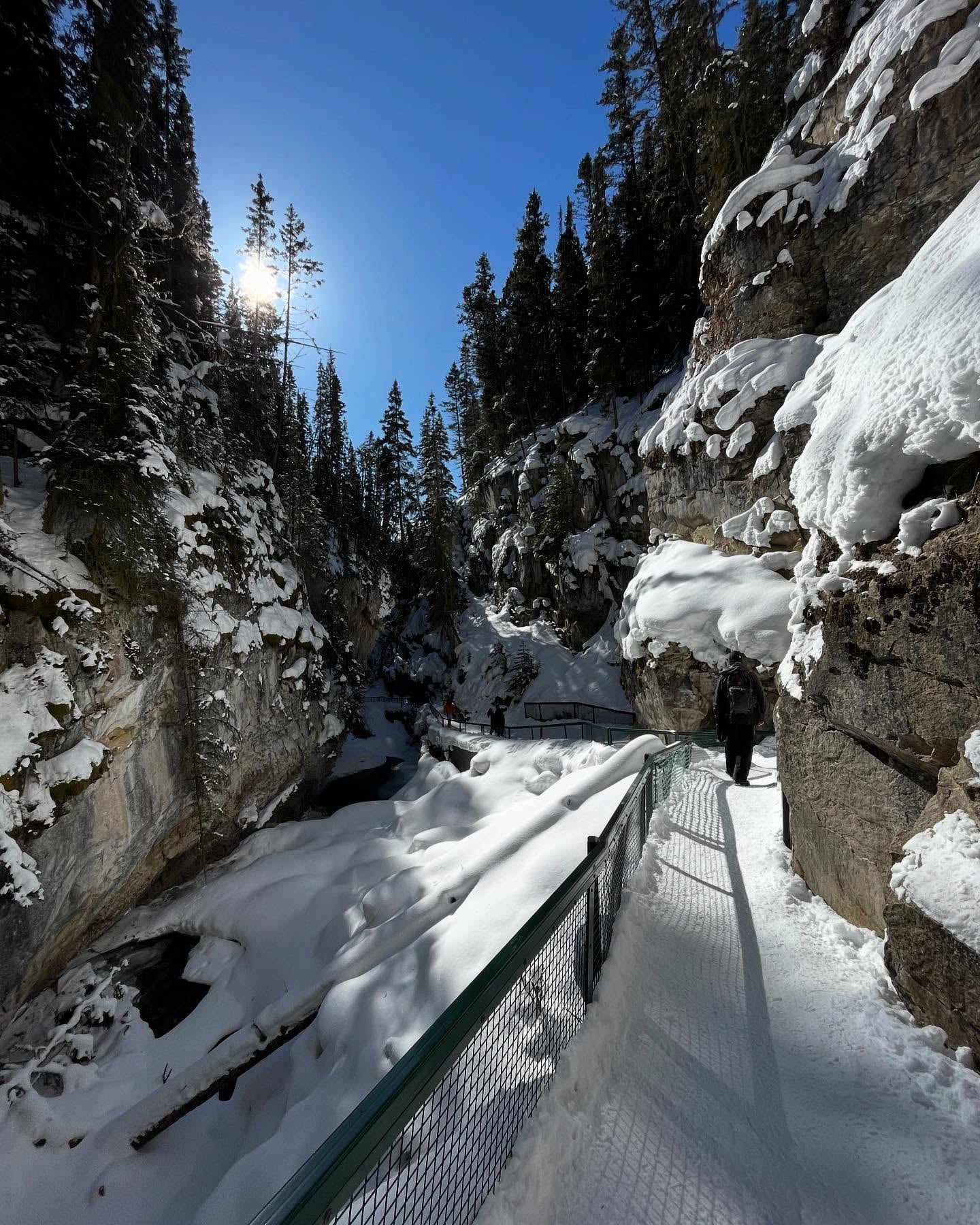
During January and February, the canyon transforms into a corridor of giant, glittering blue ice pillars. Guided tours lead visitors along the snow-dusted catwalks. Hikers can watch ice climbers scaling the frozen 30-meter-high walls of the Upper Falls while safely navigating the icy trails with microspikes.
Hand-picked tours with free cancellation and verified reviews
 Free Cancellation 4h
  Free Cancellation 11h
  Free Cancellation
  Free Cancellation
  Free Cancellation
  Free Cancellation 4h
  Free Cancellation 9h
  Free Cancellation
 The best times to visit Johnston Canyon are July and August for warm weather, or January and February for frozen waterfalls. Visitors in late 2026 must plan around a complete trail closure starting October 12.
Starting May 1, vehicle access on the eastern 17 kilometers of the Bow Valley Parkway is restricted overnight. Cyclists can take advantage of special vehicle-free daytime access during this season.
July and August offer warm weather, lush greenery, and clear turquoise waters. However, expect extreme midday crowds and severe parking congestion between 10:00 AM and 3:00 PM.
September remains highly congested with peak crowds. Late October and November are the worst times to visit, as the entire trail closes on October 12, 2026, for rockfall maintenance.
January and February provide spectacular frozen 30-meter waterfalls and opportunities to watch ice climbers. The trails have significantly fewer crowds, but wearing microspikes is absolutely essential for safety.
Johnston Canyon is an outdoor natural space open 24 hours a day, year-round. Access is affected by seasonal road and trail restrictions. From May 1 to June 25, 2026, vehicle access on the eastern 17-kilometer section of the Bow Valley Parkway is prohibited between 8:00 PM and 8:00 AM. Furthermore, the entire canyon trail will close to the public for two to three months starting October 12, 2026, to allow for rockfall hazard maintenance.
| Category | Price |
|---|---|
| Adult Daily Pass (Banff National Park) | $12.25 CAD |
| Senior Daily Pass (Banff National Park) | $10.75 CAD |
| Youth Daily Pass (up to age 17) | Free |
| Family/Group Daily Pass | $24.50 CAD |
| Adult Discovery Pass (Annual) | $83.50 CAD |
| Senior Discovery Pass (Annual) | $71.50 CAD |
| Family/Group Discovery Pass (Annual) | $167.50 CAD |
There is no separate entrance fee to hike the Johnston Canyon trail. However, all visitors must possess a valid Parks Canada Park Pass to access Banff National Park. Passes can be purchased online or at the park gates.
For complete schedules and ticket prices, visit our Hours & Fees page.
Johnston Canyon is located approximately 25 kilometers west of the Banff townsite. Travelers can reach the trailhead via public transit, private vehicle, or bicycle along the Bow Valley Parkway.
📍 Bow Valley Parkway (Highway 1A), Banff National Park, Alberta, Canada
Roam Transit Route 9 provides direct service to the canyon from the Banff High School Transit Hub. The route covers 25 kilometers and operates daily from mid-May through October. During the winter months, buses run exclusively on weekends and statutory holidays. This public transit option allows visitors to bypass parking congestion entirely.
Drivers can travel west from downtown Banff along the Bow Valley Parkway, also known as Highway 1A, to reach the large main parking lot. An alternative route via the Trans-Canada Highway covers 39 kilometers. Note that the eastern 17-kilometer section of the parkway prohibits public vehicles between 8:00 PM and 8:00 AM from May 1 to June 25, 2026.
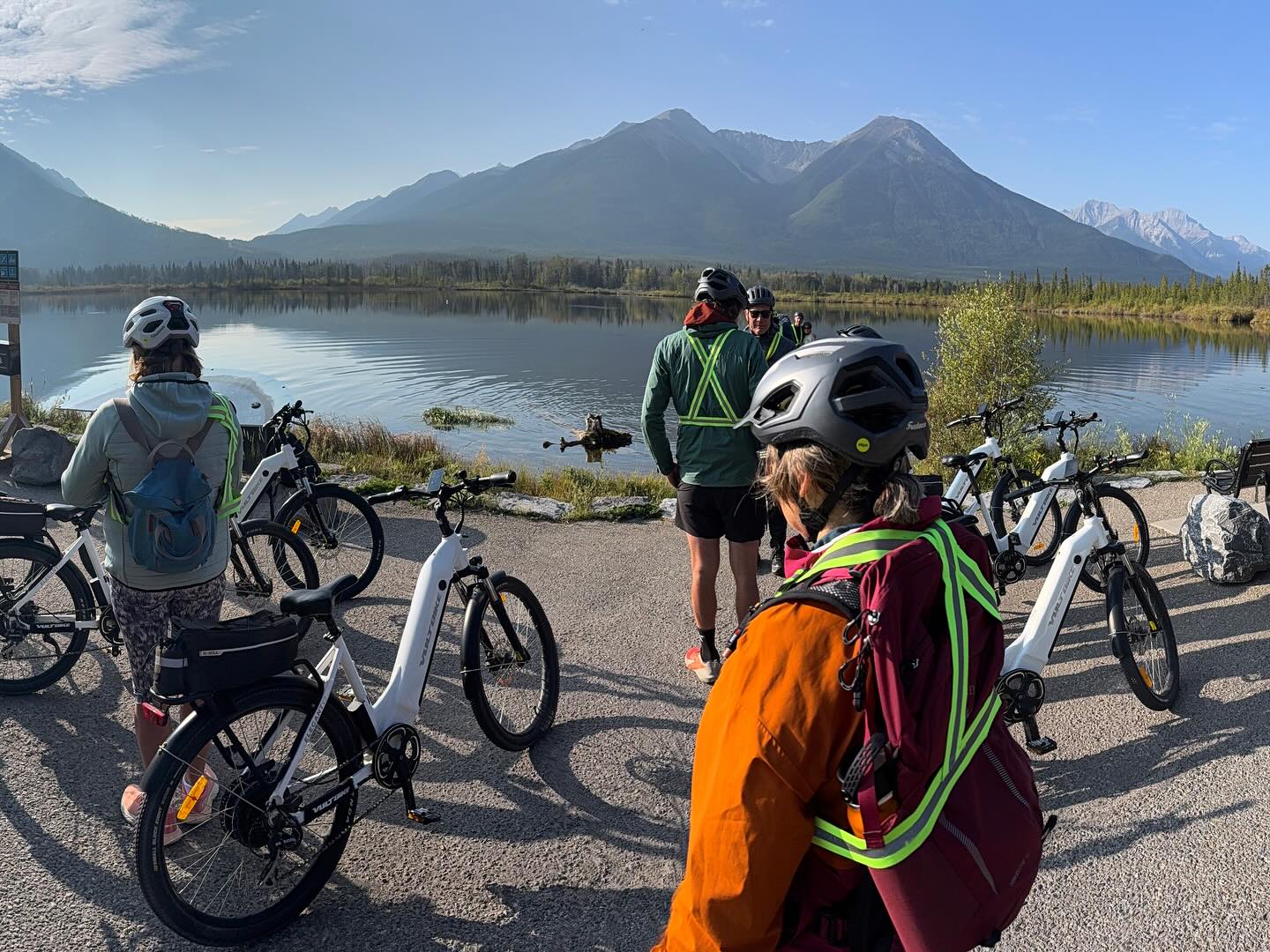
Cyclists can ride from downtown Banff along the Banff Legacy Trail to connect with the Bow Valley Parkway. Special vehicle-free periods run from April 30 to June 25 and September 1 to October 6, 2026. During these dates, the eastern 17 kilometers are closed to cars daily between 8:00 AM and 8:00 PM. Riders can also rent e-bikes from Banff Cycle for this route.
For detailed transport options and routes, visit our Directions page.
Peak summer months bring extreme parking congestion and heavy crowds between 10:00 AM and 3:00 PM. Plan to arrive at the trailhead before 8:00 AM to secure a parking spot. Alternatively, visiting after 5:00 PM provides a much quieter hike as tour groups depart.
The trail network completely lacks public bathroom facilities. Always use the heated restrooms located at the main parking lot before beginning your hike. This applies whether you are walking the 1.2 kilometers to the Lower Falls or tackling the 11.6-kilometer round trip to the Ink Pots.
The elevated steel catwalks remain open year-round but accumulate packed snow that quickly turns into slick, hazardous ice. Sturdy winter boots are not enough to prevent dangerous slips near steep drop-offs. Rent or purchase microspikes or ice cleats from local retailers in Banff or Lake Louise.
Moving off the main path is strictly prohibited between May 15 and November 15. This rule protects the breeding grounds of the endangered Black Swift bird. Parks Canada actively enforces this regulation, and violators can face severe fines of up to $25,000 CAD.
To completely bypass summer parking congestion, rent a bicycle to ride the Bow Valley Parkway. During specific periods from April 30 to June 25 and September 1 to October 6, 2026, the eastern 17-kilometer section is closed to public cars. This creates a safe, vehicle-free route directly to the trailhead.
The deep canyon interior feels noticeably cooler than the surrounding open areas. Temperatures drop significantly near the rushing waters of Johnston Creek and the shaded limestone walls. Bring a light jacket or wear adjustable layers, even on warm summer days.
Seven mineral-rich pools bubble up in a peaceful alpine meadow surrounded by mountain peaks. The trail continues directly from the canyon. It provides a quieter alternative away from the main tourist crowds.
Sheer, fortress-like rock faces dominate the skyline along the Bow Valley Parkway. Visitors can stop at the dedicated viewpoint to photograph the peak. Alternatively, Castle Junction serves as an excellent spot for a quiet picnic.
Situated in Kootenay National Park, this deep limestone canyon contains rushing glacial waters. A short hiking trail features multiple bridges crossing the gorge. Hikers can look directly down into the narrow, water-carved rock formations.
Read what travelers share about their experience visiting Johnston Canyon — from practical tips to personal highlights.
There is no specific entrance fee to hike the canyon, but you must purchase a Parks Canada Park Pass to enter Banff National Park. Daily passes cost $12.25 CAD for adults, $10.75 CAD for seniors, and $24.50 CAD for a family or group. Youth up to age 17 can enter for free.
Hiking to the Lower Falls takes about 1 hour for the 2.4-kilometer round trip. Reaching the Upper Falls requires a 5.0-kilometer round trip that typically takes 2 to 3 hours. Extending the hike to the Ink Pots adds more distance, totaling approximately 4 hours for the 11.6-kilometer return trip.
Yes, Roam Transit Route 9 operates a direct bus from the Banff High School Transit Hub to the canyon. The service runs daily from mid-May to October and costs $5.00 CAD one-way for adults. The ride covers 25 kilometers and takes approximately 35 minutes.
The trail is open 24 hours a day, year-round. However, the entire trail will close to the public for two to three months starting October 12, 2026, for routine rockfall hazard maintenance. Seasonal vehicle restrictions also apply on the eastern 17-kilometer section of the Bow Valley Parkway during spring and fall.
Yes, proper footwear and traction devices like microspikes or ice cleats are essential during the winter months. The packed snow on the elevated steel catwalks quickly turns into solid, slippery ice. You can rent these items at local retailers in Banff or Lake Louise.
The first 1.1 kilometers of the trail leading to the Lower Falls is considered wheelchair accessible. This section features a paved path and flat steel catwalks with a gentle average grade of approximately 4%. The catwalks can become narrow and highly congested during peak summer hours between 10:00 AM and 3:00 PM.
Dogs are permitted on the trail but must be kept on a leash at all times. Owners need to clean up after their pets and ensure they stay on the designated pathways. This regulation helps protect local wildlife, including the endangered Black Swift bird.
There are no public bathrooms or water stations along the hiking trails to the Lower Falls, Upper Falls, or the Ink Pots. You should use the heated restroom facilities at the main parking lot before starting. Pack plenty of drinking water in a secure backpack for the hike.
Browse verified tours with free cancellation and instant confirmation.
Find Tours